
If you’re wondering how to choose a Dharmavaram silk saree, it comes down to a handful of checks: a valid Silk Mark label, a hand-feel that is smooth and slightly heavy rather than plasticky, tightly interlocked zari at the border, a weight suited to how long you will wear it, and a seller who can tell you which weaver made it. This guide walks through all ten checks in detail, along with when to wear a pattu saree, how to care for it at home, and the questions we hear most often at our Dharmavaram showroom.
Dharmavaram in Andhra Pradesh has been a centre of silk weaving for generations, and a genuine pattu saree from here is meant to last decades, not just one function. Because it represents a real investment, it helps to know exactly what separates a handloom pattu saree from a lower-cost imitation before you hand over your money.
This guide sets out the ten checks our own team runs through with every saree that goes into the Ramanji Handlooms collection, plus guidance on when to wear one, how to keep it in good condition, and answers to the questions we hear most at our showroom.
- What Does “Pure Pattu” Actually Mean?
- 10-Point Buyer’s Checklist
- Best Occasions to Wear a Pattu Saree
- Caring for Your Saree at Home
- Why Buy from Ramanji Handlooms
- Frequently Asked Questions
What Does “Pure Pattu” Actually Mean?
In Telugu, “pattu” simply means silk, so a pure pattu saree is one woven entirely from mulberry silk yarn, with no synthetic fibre blended into the body or the border. Semi pattu and art-silk sarees copy the same designs at a lower price by mixing in synthetic yarn, which is a perfectly reasonable option for everyday wear, but it is a different product from a pure pattu saree.
Dharmavaram’s weavers built their reputation on this pure-silk tradition, using a technique where the zari border is woven separately from the body and then interlocked into it, a method recognised with a Geographical Indication (GI) tag for the town. You can read more about this weaving heritage on the Government of India’s Incredible India page for Dharmavaram. If you would rather browse finished pieces than background reading, our full Dharmavaram Pattu Sarees collection is organised by weave style.
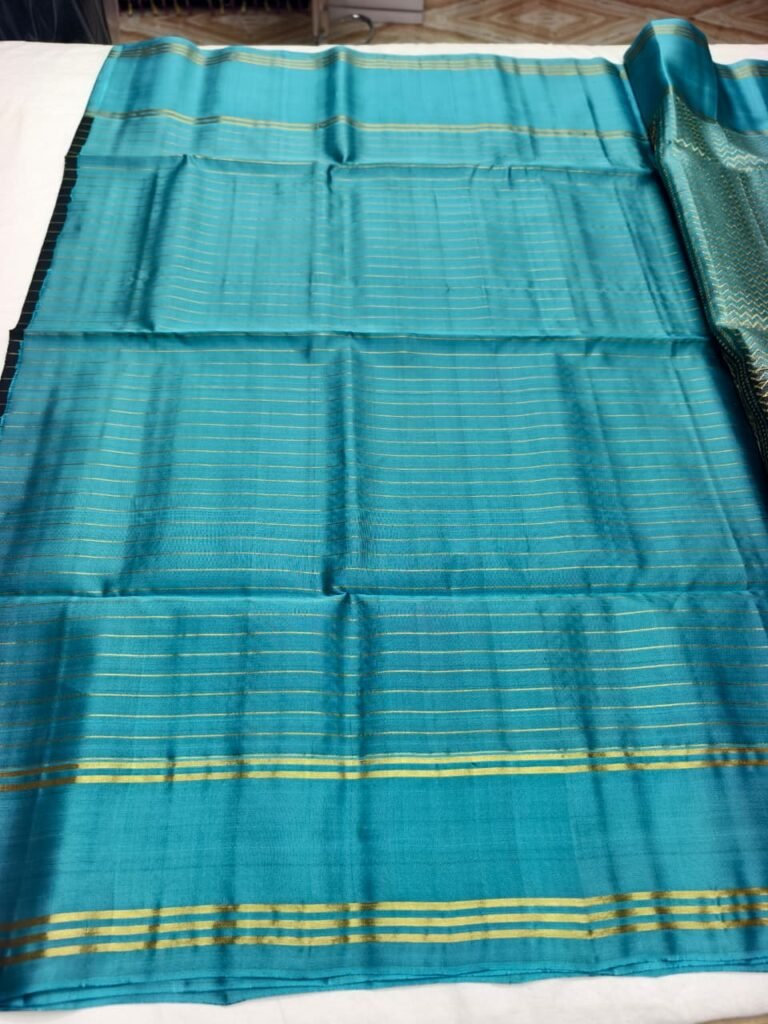
10-Point Buyer’s Checklist
Whether you are buying in person or reviewing photographs on WhatsApp, running through these ten checks will tell you almost everything you need to know about a saree before you commit to it.
1. Look for the Silk Mark
The Silk Mark is a quality label issued through the Silk Mark Organisation of India, a body set up under the Ministry of Textiles. It is not a rating of design or craftsmanship, only a confirmation that the fibre content is genuine silk rather than a blend. Ask to see the tag, and if a shop cannot show one, ask why.
2. Feel the Fabric Before the Pattern
Run your fingers over the body of the saree before you even look at the border. Pure silk has a cool, slightly slippery hand-feel with a natural drop; it should never feel stiff, papery or slightly tacky, which are signs of a synthetic blend.
3. Watch How It Catches Light
Hold the saree up and move it slightly under a lamp or in daylight. Pure silk reflects light in a soft, changing glow because of the fibre’s natural triangular structure, whereas synthetic yarn tends to throw back a flatter, more uniform shine.
4. Examine the Zari Closely
Turn the border over and look at the underside of the threads. Real zari has a warmer, slightly uneven glint and will not flake when you scratch it gently with a fingernail; imitation zari often looks a shade too silver-bright and can shed a fine metallic dust. Our guide to silk and zari types goes deeper into the different zari grades used across our collection.
5. Check How Even the Weave Is
Stretch the border gently between your hands and look along its length. In a well-woven saree the pattern repeats cleanly with no skipped threads, puckering or gaps; small irregularities are normal in handloom work, but obvious breaks in the motif usually mean the piece was rushed off the loom.
6. Test Whether the Colour Holds
Rub a damp white cloth firmly over a hidden part of the saree, ideally near the fold. A little colour transfer is normal on a brand-new saree before its first wash, but heavy bleeding onto the cloth points to a poor-quality dye that will not hold up over years of wear.
7. Weigh It in Your Hands
Pure silk has a natural body to it. A heavier bridal-weight pattu saree in our collection typically falls between 750 and 820 grams, while a lighter soft silk piece meant for daytime wear sits closer to 520-600 grams. If a saree feels unusually light for how much border and pallu work it shows, ask what it is actually woven from.
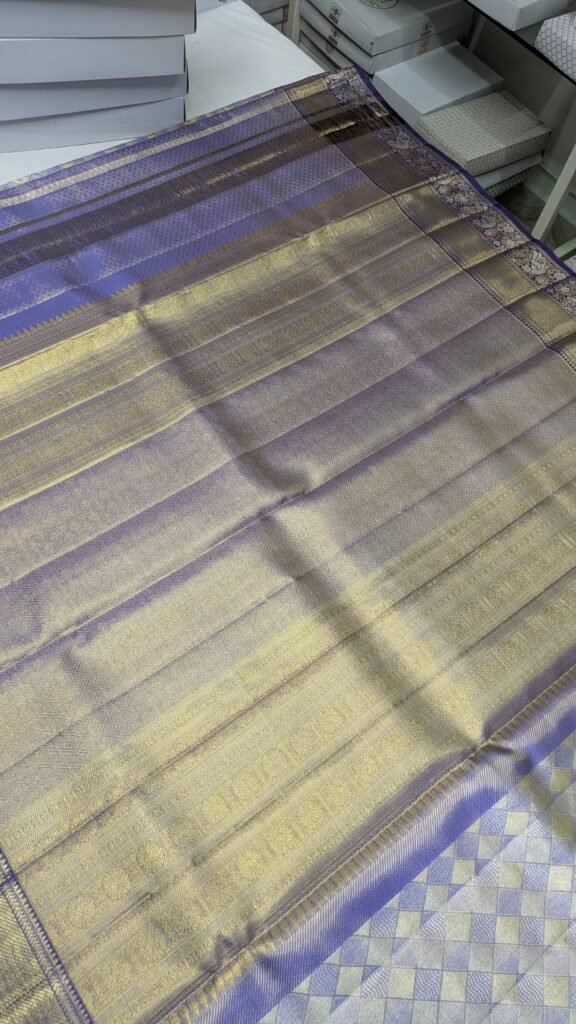
8. Inspect the Border and Pallu Together
The border and pallu carry most of a saree’s design, so look at how the motifs sit against each other where the two meet; clean alignment there is a good sign of careful finishing. Peacocks, temple lines and floral vines are common Dharmavaram motifs, and the sharper their outline, the better the weaving underneath.
9. Ask Where the Saree Was Woven
A shop that sources directly from weavers should be able to tell you roughly which weaving unit a particular saree came from, rather than shrugging and pointing at a supplier list. At Ramanji Handlooms every saree is woven in our own workshop, so we can answer this for anything in our collection.
10. Compare Prices Across a Few Sellers
Pure silk yarn and real zari both have a floor price, so a pure pattu saree priced far below similar pieces elsewhere is worth questioning rather than celebrating. Our price guide breaks down what typically drives the cost of a Dharmavaram saree up or down, which is a useful reference before you compare quotes.
For a few more at-home tests beyond this checklist, our separate guide on identifying real silk vs tube resham covers the burn test and a couple of other quick ways to catch a synthetic imitation.
Best Occasions to Wear a Pattu Saree
A pure pattu saree earns its price over years of use rather than a single event. These are the occasions where ours get worn most:
- Weddings and muhurtham ceremonies, where a heavier, zari-rich saree suits the occasion – see our bridal Dharmavaram pattu sarees if this is the main event
- Engagements, sangeet and reception functions, often in a lighter weight than the main wedding saree
- Festivals such as Ugadi, Sankranti and Dasara, when families traditionally wear silk
- Temple visits and religious functions, where a saree with a clean, traditional border is preferred over a heavily embellished one
- Gifting to mothers, mothers-in-law or elders, since a handloom pattu saree tends to be kept and worn for years rather than set aside
Caring for Your Saree at Home
A saree that is cared for properly can genuinely be handed down to the next generation. A few habits make the biggest difference:
- Always dry clean; pure silk should never go through a washing machine or a regular wash cycle
- Wrap it in soft muslin or cotton cloth for storage, not plastic, which traps moisture against the fibre
- Refold along different lines every few months so permanent crease marks do not set into the silk
- Tuck a few dried neem leaves into the storage cloth, an old but genuinely effective way to keep silverfish and other insects away
- Take it out and air it in the shade every couple of months; direct sunlight will fade the colour over time
Why Buy Your Pattu Saree from Ramanji Handlooms
Once you know what to look for, the shop you buy from matters just as much as the saree itself:
- Every saree in our collection is woven on our own looms in Dharmavaram, not bought in from multiple traders, so we know exactly how each one was made
- We state the silk type and zari grade on every product page rather than leaving buyers to guess
- You can see and feel a saree in person at our Dharmavaram showroom before deciding, including pieces from our Kanchi Pattu and semi pattu ranges side by side
- We supply both individual retail buyers and boutiques ordering in bulk at wholesale pricing
- A saree bought from us can be sent back to our workshop for reweaving or minor repair if the border or pallu ever needs attention
Frequently Asked Questions
Here are the questions we are asked most often about choosing and looking after a Dharmavaram pattu saree.
What exactly does the Silk Mark label guarantee?
Can I check whether a saree is pure silk without a burn test?
How should I store a pattu saree between wears?
Does a heavier saree always mean better quality?
What is a good lightweight Dharmavaram silk saree to choose for regular festive wear?
Visit Ramanji Handlooms in Dharmavaram
Now that you know what separates a genuine Dharmavaram pattu saree from an imitation, the easiest way to put this checklist into practice is to see and feel a few sarees in person. If you cannot visit right away, message us the product SKU on WhatsApp and we will send extra photographs or a short video before you decide.
Address: 1-555, Shanthi Nagar, Dharmavaram, Andhra Pradesh – 515671
Phone / WhatsApp: +91 99517 30186